Uppsala domkyrka
Uppsala Municipality · Uppsala County
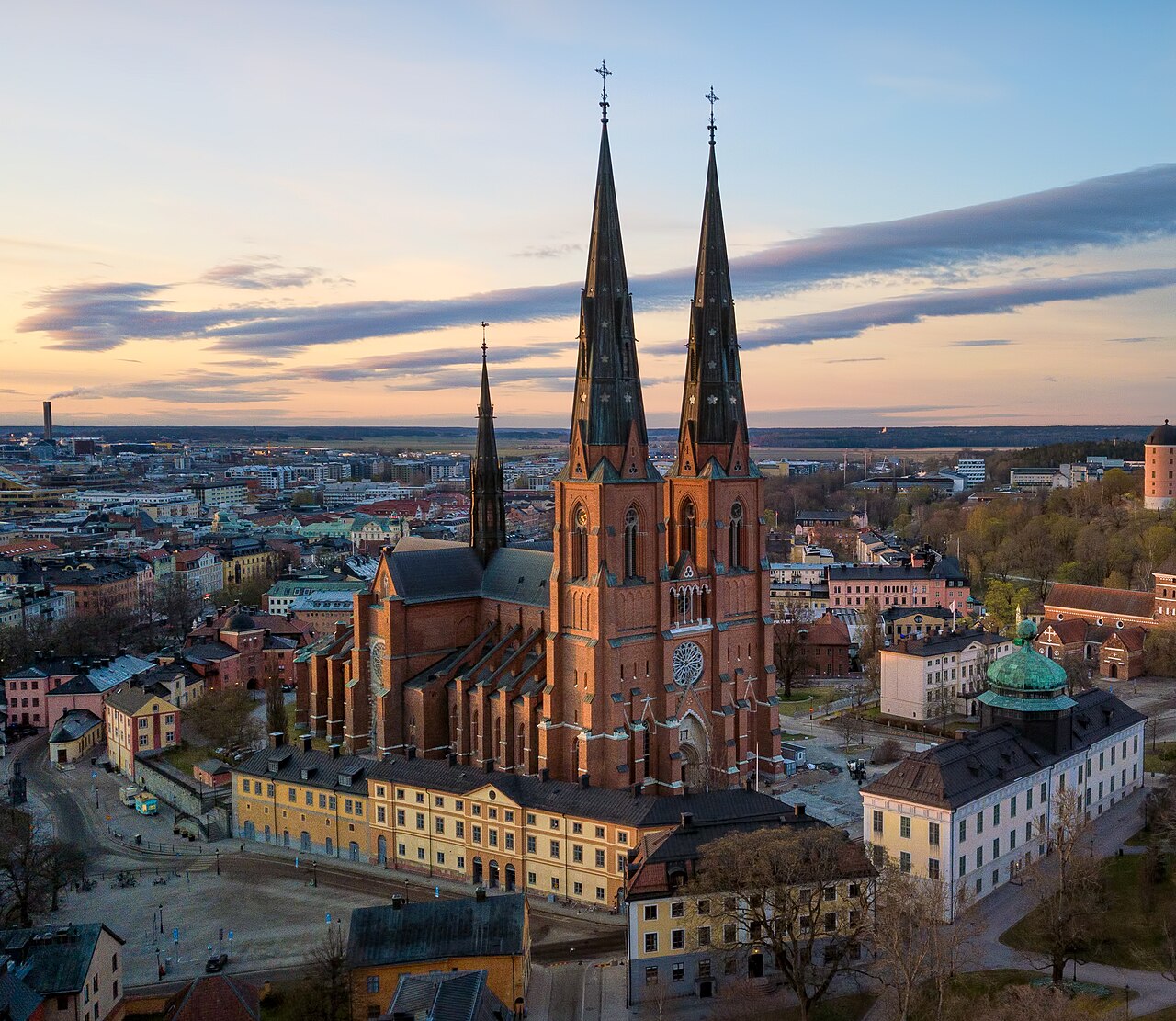
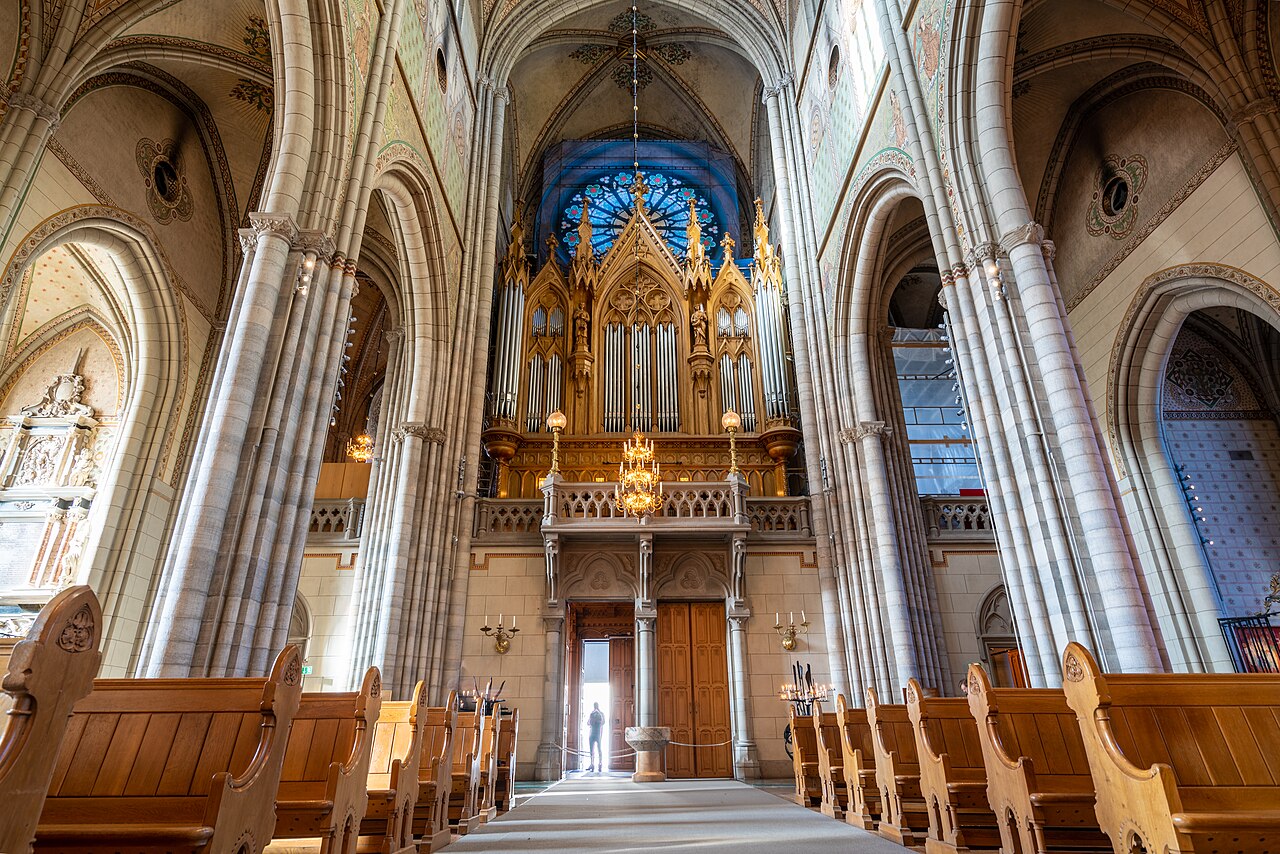
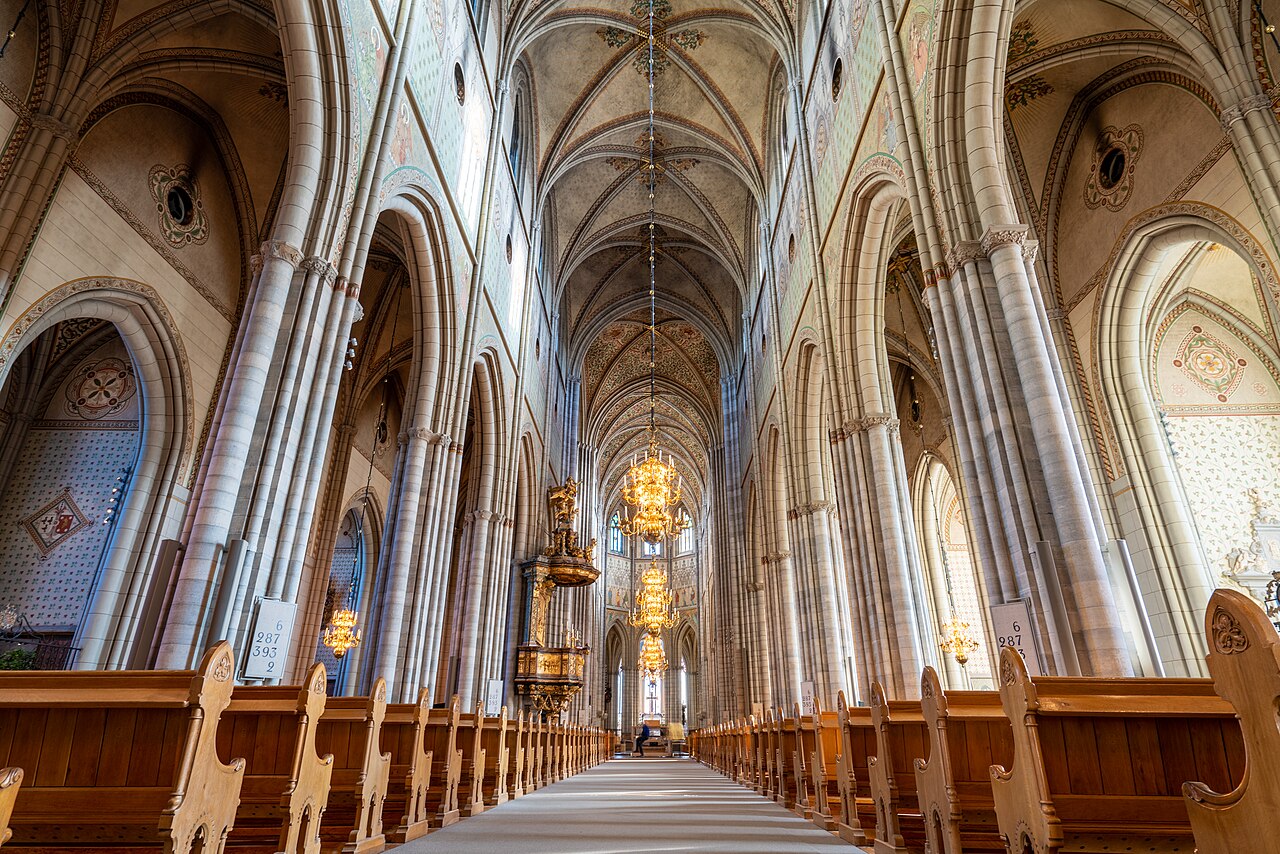
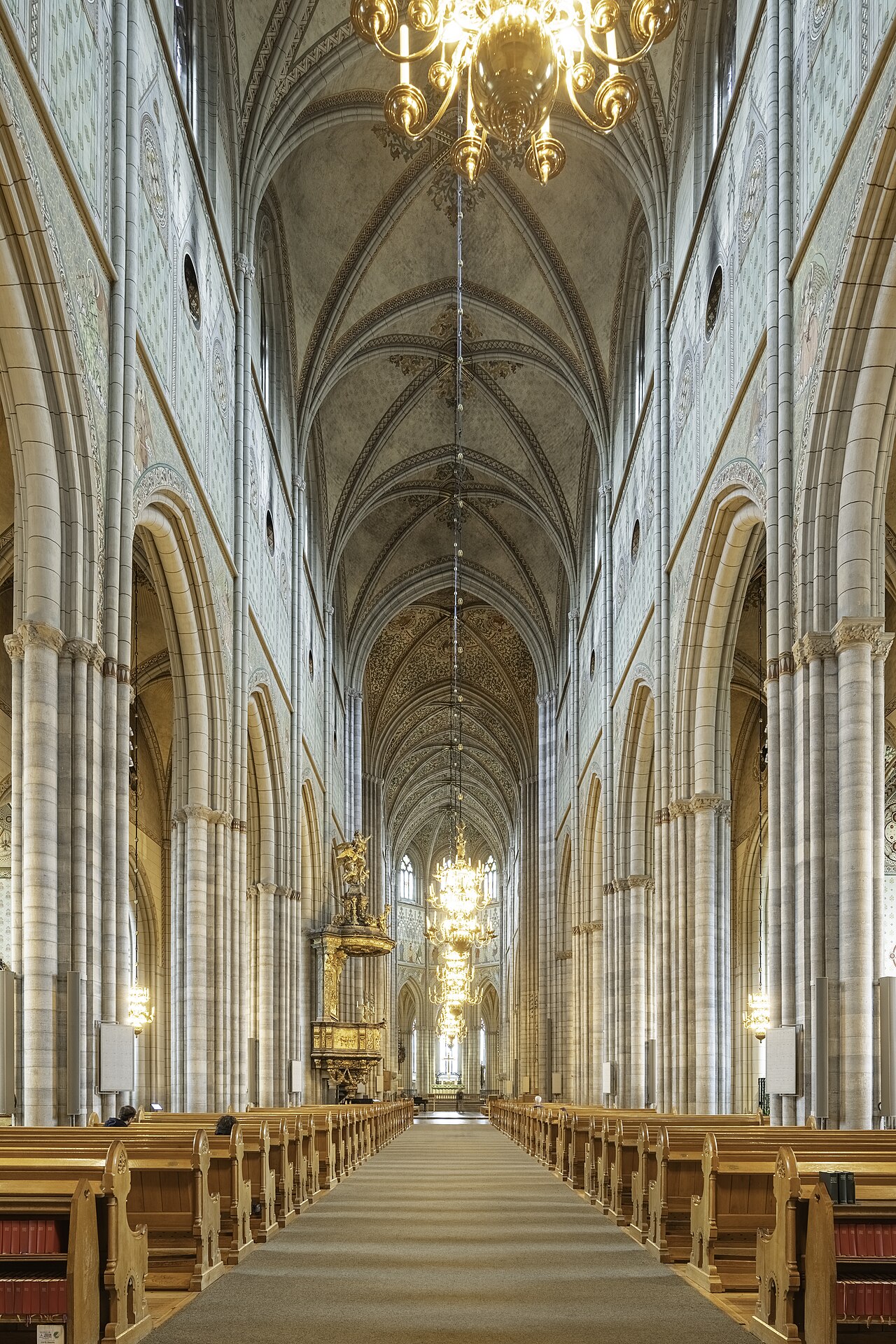
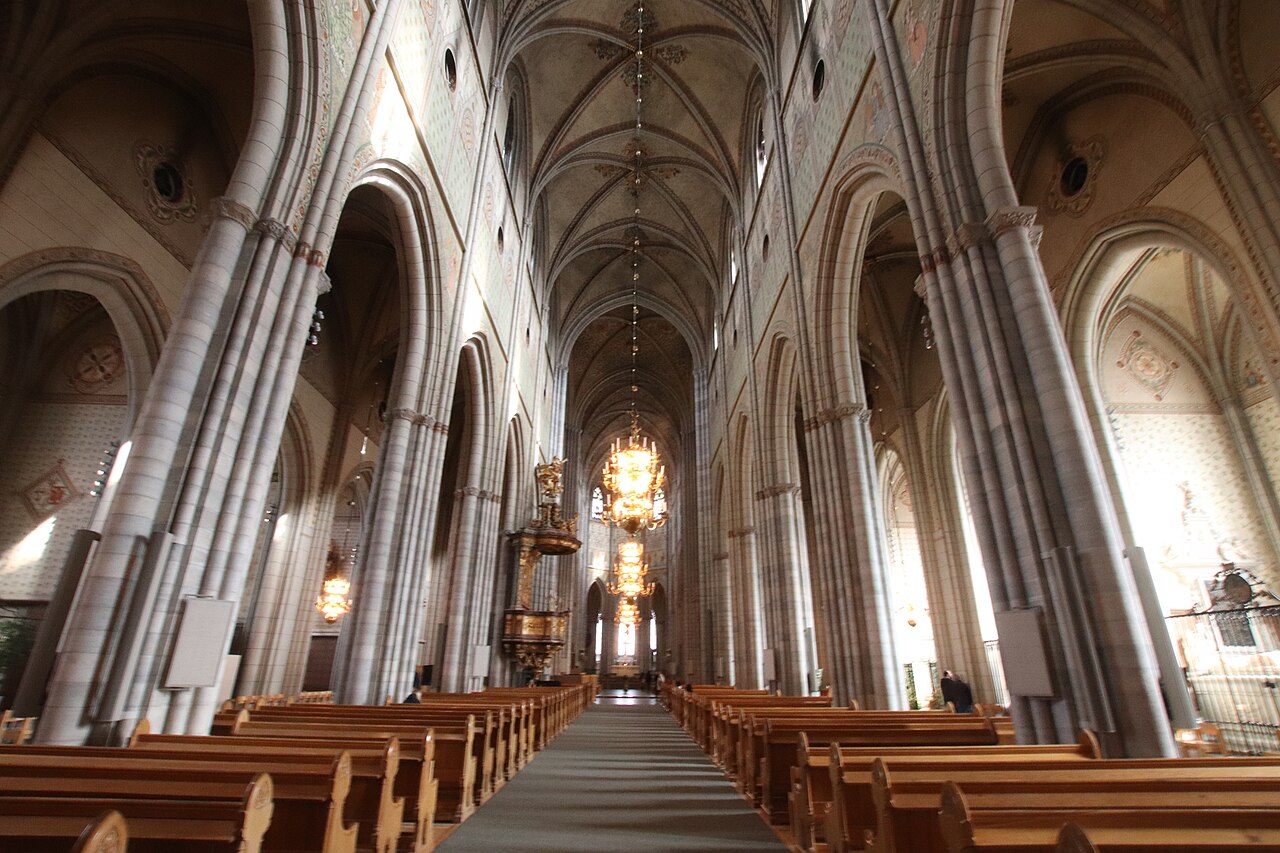
Uppsala domkyrka is the largest Gothic church in the Nordic countries, built of brick and limestone after French models. Most of Sweden's monarchs between 1441 and 1719 were crowned here, and it holds the funerary monuments of Gustav Vasa and John III.
- Begun in the 1270s, consecrated 1435
- The largest Gothic church in the Nordic countries
- The reliquary of Saint Eric
Domkyrkoplan, UppsalaVisiting in person
About the church
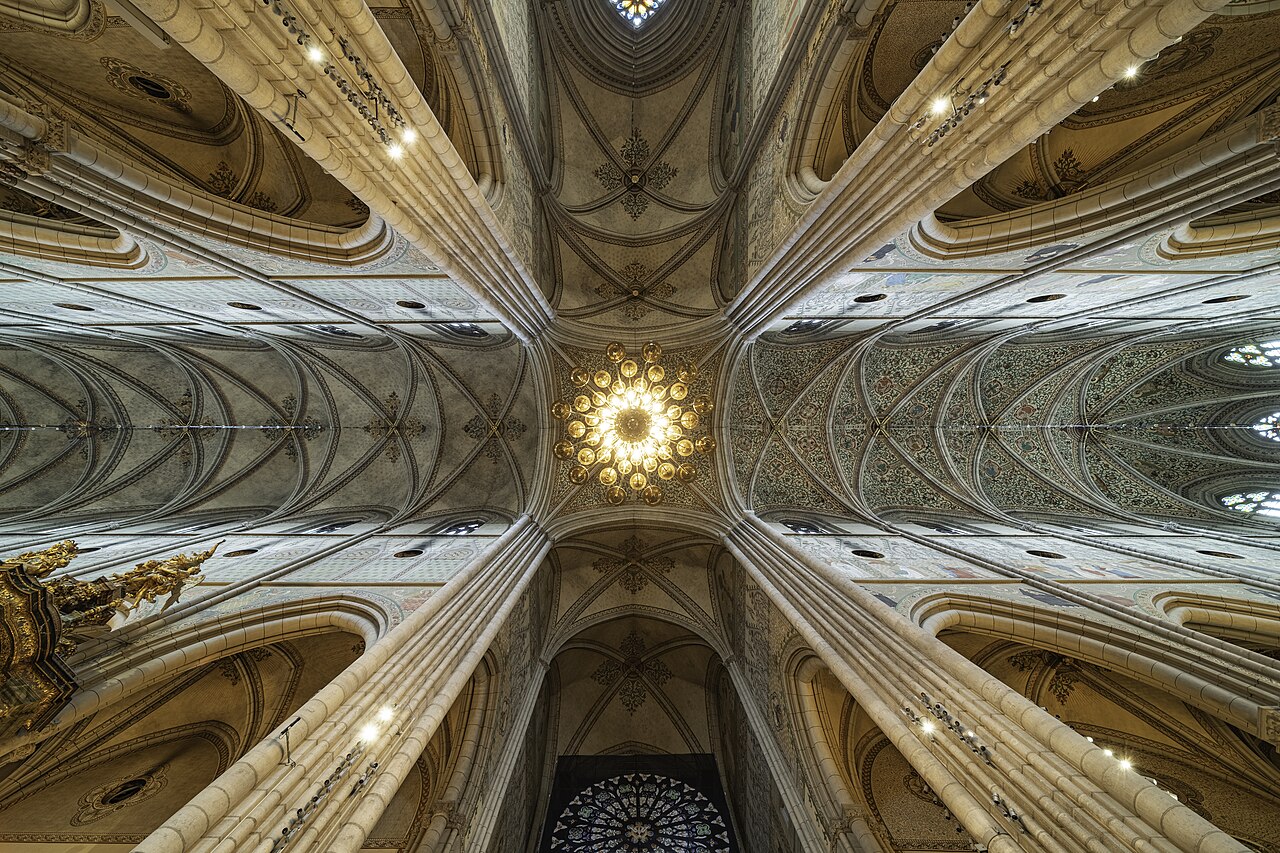
In 1258 the Pope gave permission to move the cathedral from Gamla Uppsala to Östra Aros, and in the 1270s building began on Domberget. A French masons' lodge began the work, and in 1287 a new group arrived under the master mason Étienne de Bonneuil. The south portal, with rich reliefs and sculptures, was in use by 1310 at the latest, and the high chancel was used from the 1310s. By around 1360 the chancel and transept were finished, and the nave with its side chapels was built next. The church was consecrated in 1435, and the towers were built after the consecration.
The church burned in 1572, and in 1619 the towers were given new spires. In the town fire of 1702 large parts of the church were destroyed. The rebuilding was begun by Nicodemus Tessin the Younger and completed in 1747 by Carl Hårleman, and the church was given lower-pitched roofs and a whitewashed interior. Helgo Zettervall's restoration in 1885–1893 brought back Gothic forms; the interior was given decorative paintings and the towers their present spires. During the restoration of 1971–1976 some of Zettervall's details were removed, the high chancel was refurnished and a museum was set up in the towers.
After the Reformation the church became both a parish church and a burial church, and the saints' chapels became burial chapels for the royal family and the nobility. The most striking are the burial chapels of Gustav Vasa and Katarina Jagellonica. There are also burial chapels for the Horn, Sture and Bielke families, and in 1691–1692 a burial chapel was built for Count Bengt Oxenstierna.
Timeline
- 1258The Pope permits the move from Gamla Uppsala
- 1270sBuilding begins
- 1287Étienne de Bonneuil in Uppsala
- By 1310The south portal is taken into use
- Around 1330The north rose window
- Around 1360Chancel and transept finished
- 1402Collapse on the south side
- 1435The church is consecrated
- 1441–1719Coronation church
- 1572Fire
- 1619New tower spires
- 1702The town fire
- 1747The rebuilding is completed
- 1885–1893Zettervall's restoration
- 1971–1976Restoration
Things to see
The towers
The two west towers are 118.7 metres high, the same as the length of the church. The spires were given their present form in the 1880s.
The Window of the Son
Above the south portal is the Window of the Son, which at 119 square metres is the largest church window in Sweden.
The relics
The church keeps the reliquary of Saint Eric and a reliquary of Saint Bridget. Saint Eric, Saint Lawrence and Saint Olaf were the church's patron saints at the consecration.
The royal tombs
The church contains the funerary monuments of Gustav Vasa and John III and their queens.
The portals
The south portal was the most richly decorated portal in the Nordic countries but has been badly damaged by the climate.
The north rose window
The rose window of the north transept from around 1330 is the last trace of the French masons' lodge. The window was so wide that the whole wall had to be built of limestone.
Sources
The text was written by Svenskakyrkor.se in our own words, based on the sources below.
Photos
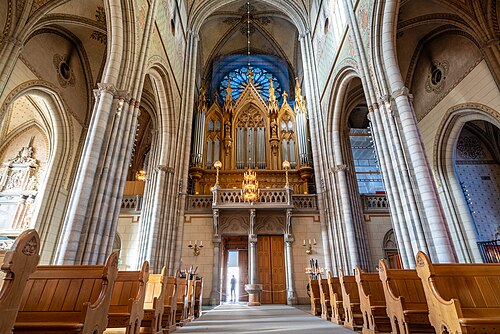 Photo: Miguel Mendez, CC BY 2.0. Image source
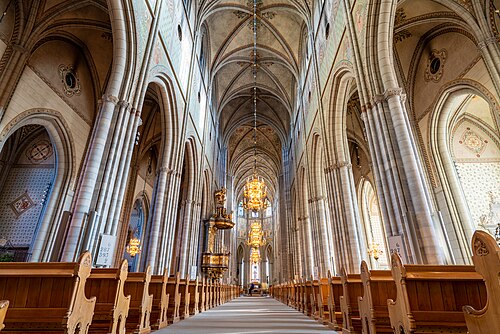 Photo: Miguel Mendez, CC BY 2.0. Image source
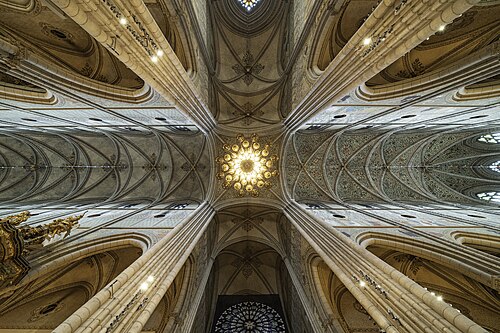 Photo: T meltzer, CC BY-SA 4.0. Image source
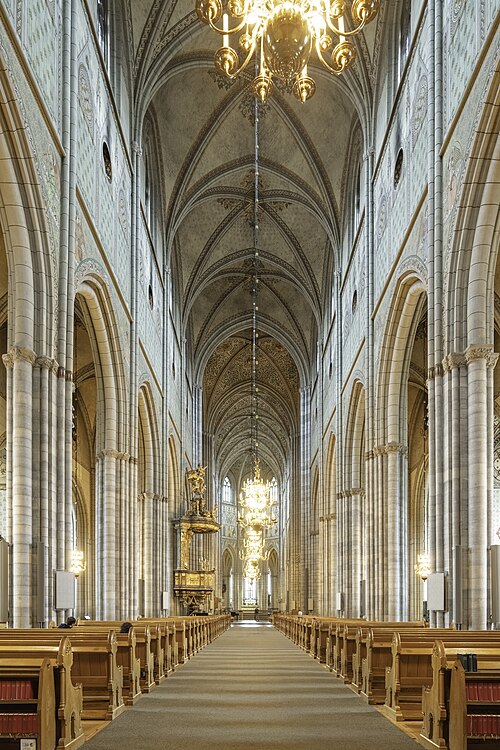 Photo: T meltzer, CC BY-SA 4.0. Image source
 Photo: Jules Verne Times Two, CC BY-SA 4.0. Image source
 Photo: Atleett, CC0. Image source
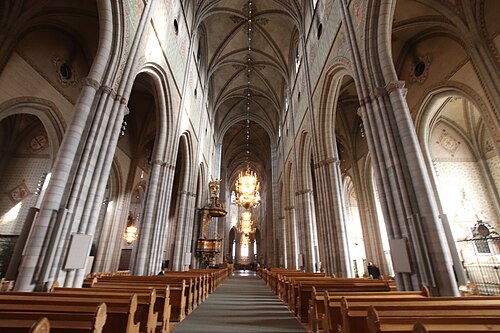 Photo: Andrzej Otrębski, CC BY-SA 4.0. Image source
 Photo: Atleett, CC0. Image source



No virtual tour registered yet
We have not found a virtual tour of Uppsala domkyrka. That does not mean there isn’t one. Do you know of one? Let us know.
Nearby